| Your privacy is important to Best Buy. For more information on how Best Buy protects your privacy, steps you can take to protect your personal information and alerts on privacy risks facing consumers, please visit the Best Buy Privacy Hub. |
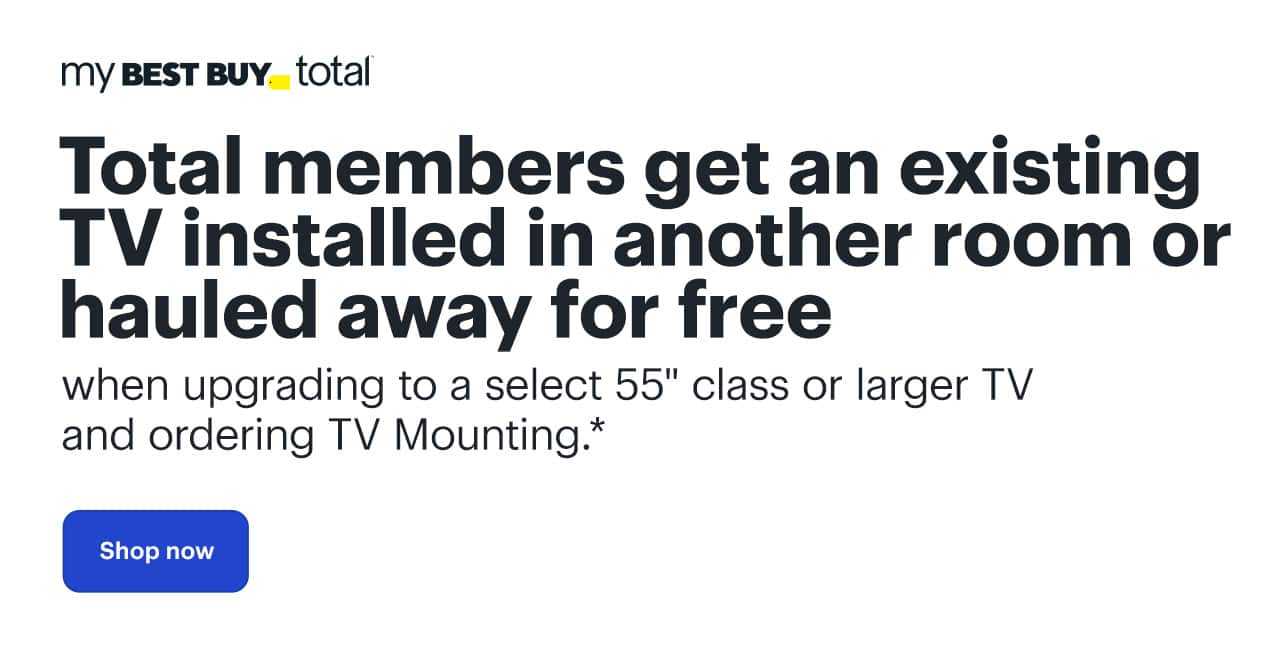
HAUL-AWAY OFFER:
*Exclusions, terms and conditions apply. |
AUTHORIZED APPLE IPHONE REPAIR:
*We will price match Apple service and repair costs of any Apple Authorized Service Provider. Limitations apply. Valid on select Apple models. Reservation required. Most repairs will be completed on the same day if all necessary parts are in stock and the device is not extensively damaged. Certain repairs may require a longer mail-in exchange. |
MY BEST BUY MEMBERSHIPS™ DETAILS:
*For My Best Buy Plus™ and My Best Buy Total™ members, some limitations apply on shipping, extended returns and other benefits and some benefits do not apply to Marketplace Products, see terms for details. For My Best Buy Total members, product protection benefit covers most new products purchased from Best Buy while the membership is active and is subject to service fees and claim limits. Active membership is required to keep product protection benefit for up to 24 months. Terms, conditions and exclusions apply. Details at BestBuy.com/Memberships. |
BEST BUY OFFER TERMS:
Savings offers are based on markdowns from Comparable Value and, unless otherwise noted, exclude special order, clearance, open-box, refurbished, and pre-owned items and Marketplace Products. Prices are subject to change and represent BestBuy.com® pricing; in-store pricing and availability may vary. Products included in bundle/package/free-with-purchase offers must be purchased in the same transaction to receive the benefit. Offers may include instant savings on individual items. For buy one, get one offers, discounted or free item(s) must be of equal or lesser value. Best Buy® Gift Cards have no expiration date or fees and are good toward future purchase. |
| This email is a Best Buy advertisement. If you no longer wish to receive our marketing emails, unsubscribe here. If you have difficulty with the unsubscribe link, you may also send an email to PrivacyManager@bestbuy.com. For more information, read our Privacy Policy or call 1‑888‑BEST BUY. |
Best Buy 7601 Penn Avenue South, Richfield, MN 55423-3645
© 2026 Best Buy. All rights reserved. |
|
|